
You step off a plane in a city you have never visited. Your phone buzzes, finds a network, and then asks you to pay a small fortune for roaming. Or perhaps you are running a project with five colleagues, and every client insists on calling “the project number”, which, inconveniently, lives on one person’s phone. Both situations come down to the same question: what kind of connection should you actually be using?
The basics: three ways to be reachable
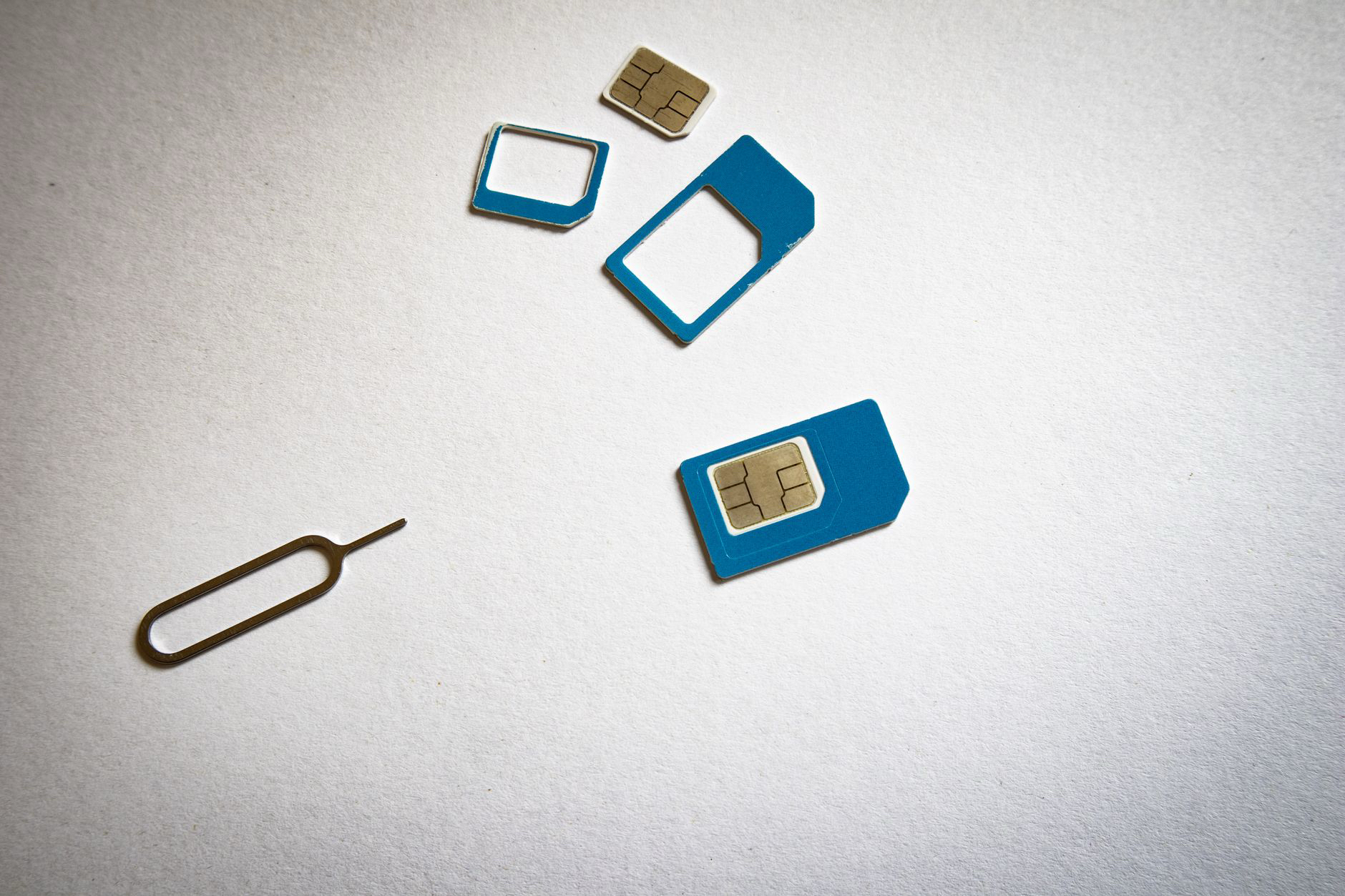
A physical SIM is the small card we have all been slotting into phones for decades. It ties your number to a piece of plastic that you can move from one handset to another in seconds.
An eSIM does the same job without the card. The profile is built into the phone and activated by scanning a QR code or using your operator’s app, so there is nothing to lose, snap or post abroad.
A virtual number (often called VoIP) is not tied to a device at all. It lives in the cloud, through services such as WhatsApp Business or a cloud switchboard, and can be answered from several devices at once.
There is something quietly philosophical in all this. For decades, our phone number was an object: a piece of plastic you could hold, lose, or lend to a friend. The eSIM turns that object into a profile, a line of code that lives inside the device. Our identity, in the telecommunications sense, has become immaterial, and with it comes a small but real question: when the thing that proves who we are no longer has a body, who really holds it, us or the operator?
Everyday personal use
For most people, both options work perfectly well. If your phone is recent, an eSIM is the more convenient choice: you can run two lines on one handset, and there is no card to misplace. It is also harder for a thief to simply pull out and use elsewhere.
If you change phones often, or lend them to family, a physical SIM still wins on simplicity. Moving an eSIM to a new device usually involves a few steps with your operator, whereas a card takes ten seconds.
A professional number
For an individual professional, the eSIM is a quiet gem. It lets you keep work and private life on the same phone, with two numbers and two sets of settings, without carrying a second device.
The picture changes completely for teams. If several people need to answer the same number, an eSIM is actually less practical, because it belongs to a single device. A virtual number wins here: colleagues can pick up the same line from different phones or computers, at the same time. The one catch is that some two-step verification systems refuse to send codes to virtual numbers, so keep a real SIM for anything security-critical.
One risk deserves a mention: SIM swapping. In this scam, a fraudster persuades your operator to move your number to a SIM they control, and then intercepts your verification codes. Whatever you choose, protect your account with a PIN, and prefer an authentication app over text messages for anything important.
Travelling abroad
This is where the eSIM clearly shines. You can buy a local data plan from your sofa, scan a code, and land already connected, with no kiosk queues and no tiny cards to swap in a taxi.
Where a physical SIM still wins
- Mainland China: real-name registration rules make local eSIMs difficult. Tourists can still use roaming eSIMs, but they should be set up before departure, as many provider apps are blocked once you are there.
- Phones without eSIM support: some models sold in China, Hong Kong and Macao lack eSIM, even when the same model elsewhere has it.
- Devices that only take cards: routers, dongles and GPS trackers often accept a physical SIM only.
- Emergencies: if your phone breaks or dies, a physical SIM can be moved to a spare handset immediately.
Quick guide: which should you choose?
| Situation | Best choice | Why |
|---|---|---|
| Everyday use, recent phone | eSIM | Dual lines, nothing to lose |
| Everyday use, older or budget phone | Physical SIM | Many older models have no eSIM support |
| Frequent phone changes | Physical SIM | Moves between devices instantly |
| Sharing or lending a phone with family | Physical SIM | Easy to swap in and out |
| Spare phone for emergencies | Physical SIM | Moves to a backup handset in seconds |
| Solo professional | eSIM | Work and private on one phone |
| Team sharing one number | Virtual number | Several people, several devices |
| Travel | eSIM | Instant local data, no swapping |
| Routers, dongles, trackers | Physical SIM | Often accept cards only |

There is no single winner, only the right tool for the moment. The card in your pocket, the profile in your phone, the number that lives in the cloud: each is a different answer to the same old question of how we stay reachable. So before your next trip or your next project, take two minutes to check whether your phone supports eSIM, and ask who actually needs to answer your calls. Which one will you be switching to? Let us know in the comments.

Comments